

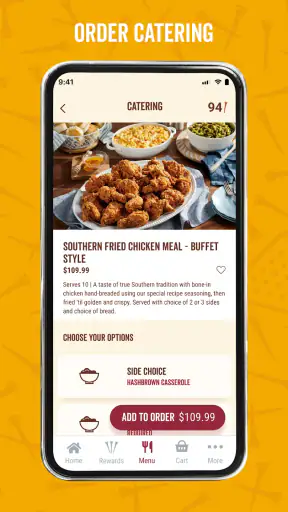
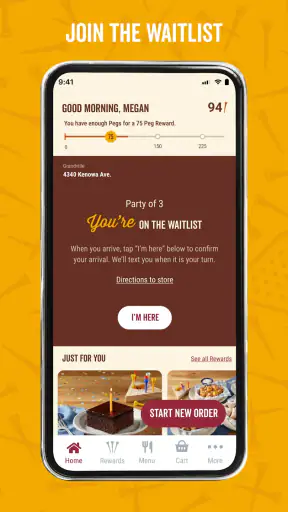
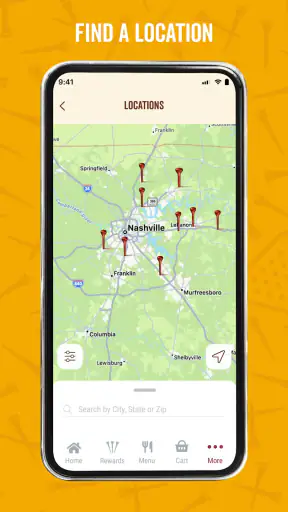
I approached Cracker Barrel as more than a digital menu. It is a free Food & Drink app from Cracker Barrel CBOCS, designed for people who already visit the restaurant or want a simpler way to plan a visit. My main question was not whether it looked polished, but whether it gave me enough control to make a useful decision without creating unnecessary friction around accounts, personal information, or ordering.
That distinction matters with restaurant apps. A good one should help me decide where to eat, understand what is available, and move through the visit more smoothly. It should also make clear when I am browsing, when I am signing in, and when I am sharing information for a specific purpose. In my experience, this app is most convincing when used as a practical companion to a Cracker Barrel visit rather than as an all-purpose food discovery tool.
What the app is really useful for
The app’s strongest starting point is its narrow focus. Instead of trying to cover every restaurant in town, it centers the Cracker Barrel experience. That makes it easier to judge: if I am considering a meal there, the app has a clear reason to be on my phone; if I rarely visit, its value drops quickly.
The developer is Cracker Barrel CBOCS, and the app has built a substantial audience, with more than a million installs and an average rating of 4.6 from roughly twenty-two thousand ratings. Those figures do not prove that every interaction will be smooth, but they do suggest that the app is established rather than experimental. It has also accumulated around four thousand written reviews, giving prospective users a useful reminder that this is a regularly used restaurant tool.
I would describe it as a convenience layer around the brand’s restaurants, not a replacement for every part of a physical visit. It can be helpful before leaving home, while deciding between menu choices, or when I want to avoid searching through several unrelated pages. The benefit is less about discovering something completely new and more about reducing small decisions before I arrive.
A realistic example is a weekday evening when I am driving with family and someone wants a familiar meal. I can use the app before leaving to orient myself around the visit instead of waiting until we are already seated or trying to search on a small browser screen in the car park. That kind of preparation is where a branded restaurant app earns its place.
Trust begins with a limited, understandable purpose
I find the app easier to assess because its purpose is visible. It is not presenting itself as a general social network, a broad delivery marketplace, or a payment wallet for unrelated purchases. The closer an app stays to the task I installed it for, the easier it is for me to notice when a request feels relevant and when it feels excessive.
That does not mean I would automatically grant every permission or create an account without thinking. It means I can evaluate each choice against a clear use case. If I am only checking restaurant information, I expect to be able to distinguish that browsing activity from actions that require identifying me. Keeping those two moments separate is important for anyone who prefers to share as little as practical.
The app is rated Everyone, which makes it approachable for households and older users who may not want a complicated interface. I would still guide a child through any account, location, or ordering decision rather than assuming an age label explains all privacy implications. An age rating describes suitability, not the amount of personal information a person should volunteer.
Account choices deserve attention
One of the most useful habits with any restaurant app is to pause when an account prompt appears. I ask myself whether I am about to perform an action that genuinely needs saved details or whether I am simply looking around. For Cracker Barrel, that distinction can prevent a casual menu check from turning into a larger commitment than I intended.
If I am planning a one-off visit, I prefer to begin with the least identifying path available on the screen. If I return often, an account may become more worthwhile because repeated visits can justify the time spent managing personal details. The trade-off is straightforward: convenience can improve when information is saved, but the account becomes another place where I need to review settings and keep credentials under control.
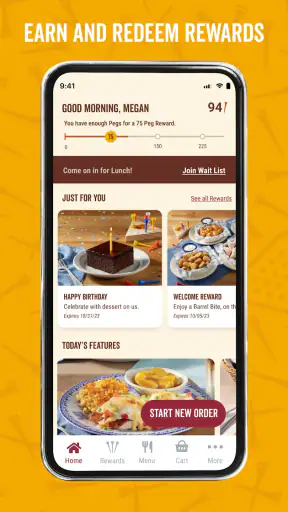
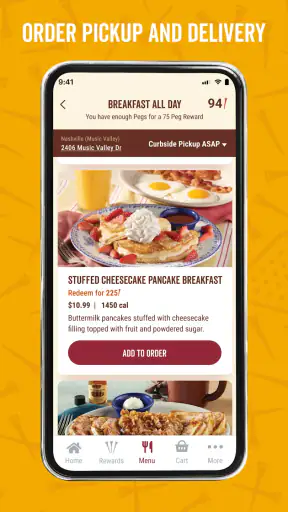
I also recommend checking the wording on every confirmation screen rather than tapping through automatically. Restaurant apps can combine several steps—selecting a location, choosing an item, preparing an order, or joining a rewards-related flow—so I want to know exactly what I am confirming. A clear final review is more valuable to me than a fast interface that makes me guess what will happen next.
My practical rule is simple: browse first, identify yourself only when the next action clearly benefits from it. That rule keeps the app useful without treating every visit as a reason to create a detailed profile.
Data-sensitive moments during an ordinary visit
The most sensitive moment is usually not opening the app. It is the point where the app may connect a restaurant decision with a person, a location, or a transaction. That is when I slow down and look for visible choices. If a feature asks for location access, I consider whether I need location-based convenience right now or whether selecting a restaurant manually is enough.
Location can be helpful when I am traveling or trying to identify a nearby restaurant, but it is not equally valuable on every occasion. If I already know where I am going, manual selection may give me the same practical result with less ongoing access. I would rather make that choice deliberately than leave a permission enabled simply because it was convenient once.
Account information deserves similar care. I avoid entering details while distracted, especially when I am standing in a busy restaurant or passing a phone around the table. I check that the selected location and order details match my intention before submitting anything. This is not unique to Cracker Barrel, but the app’s usefulness makes it easy to move quickly, and speed is exactly when small mistakes happen.
Another overlooked moment is using the app on a shared device. A family tablet or a phone handed to another person can expose whatever remains signed in or visible on the screen. I would sign out when appropriate, avoid saving credentials on a device other people use, and close screens containing personal information after finishing. These are simple actions, but they give me more control than relying on a brand’s interface to anticipate every household situation.
How I judge visible user control
For me, trust is strongest when an app makes choices visible at the moment they matter. I look for clear distinctions between optional browsing and required steps, understandable confirmation language, and settings that do not force me to guess whether a change has taken effect. I also want to know when I am moving from information into an account or transaction flow.
Cracker Barrel is easier to use when I treat it as a sequence of deliberate decisions rather than one continuous tap-through. I select the relevant restaurant, review the information I need, and only then decide whether signing in or sharing additional details is worthwhile. That workflow gives me agency even when I am in a hurry.
A useful tip is to prepare before reaching the restaurant. I can check the app at home, where I have time to read screens and correct mistakes, instead of trying to make privacy or account decisions while waiting for a table. This also helps separate genuine convenience from pressure created by a busy environment.
Another tip is to revisit the app’s settings after an update. The current version is 10.0.3.1340, and updates are a normal part of maintaining a mobile app. I do not assume that an update changes permissions or account behavior, but I do take it as a reason to glance at the available controls again. A quick review is worthwhile whenever an app receives a substantial interface change.
Where this app beats ordinary alternatives
The usual alternative is a web search. A browser is often better when I am comparing several restaurants, looking for independent opinions, or trying to find information beyond one brand. It also avoids adding another dedicated app to my phone. For a single Cracker Barrel visit, however, the dedicated app can feel more direct because it keeps the relevant restaurant context together.
A map app is another alternative. Maps are better for comparing distances, checking routes, and viewing nearby choices across different brands. They are not necessarily the best place to manage a focused Cracker Barrel visit. I see the two tools as complementary: maps answer “where should I go?” while the restaurant app is more useful once I have already narrowed the choice.
Third-party food platforms may be preferable for people who want one account covering many restaurants. Their advantage is breadth, but that breadth can also mean more menus, promotions, and account layers between me and a simple meal decision. If I eat at several chains, a broader service may be more efficient. If I specifically want Cracker Barrel information, the official app is the more targeted option.
The trade-off is that a focused app has focused limitations. It does not become a universal dining planner just because I installed it. I would skip it if I rarely visit the brand, if I am mainly comparing independent restaurants, or if I strongly prefer not to maintain separate restaurant accounts. In those situations, a browser or maps app is likely the cleaner choice.
Who will get the most from it
I think the app suits regular Cracker Barrel guests, families planning a visit, and anyone who prefers handling basic restaurant decisions before arriving. It is also a reasonable choice for people who want a direct brand-specific experience rather than navigating a large third-party platform.
It may be especially helpful for someone coordinating a meal for several people. One person can check the relevant details in advance, discuss choices with the group, and reduce the amount of time spent making decisions at the restaurant. That is a modest benefit, but it is exactly the sort of everyday friction a restaurant app should remove.
I would be more cautious about recommending it to someone who visits only once, dislikes account creation, or wants a complete comparison of restaurants in the surrounding area. Installing a dedicated app has a maintenance cost: storage, updates, notifications, and another place to review personal settings. The free price removes the financial barrier, but it does not remove those practical considerations.
Performance expectations and everyday friction
The app has been available since August 27, 2018, and its current version is 10.0.3.1340. It requires iOS 12 or later, so compatibility is worth checking before installation on an older Apple device. The broad age rating and large install base make it approachable, but compatibility and personal preferences still matter more than popularity for an individual user.
I would not judge the app solely by how quickly it opens. Restaurant tools are often used in imperfect conditions: weak signal in a car park, one-handed operation, or a crowded table with several people asking questions. I value clear recovery from a mistaken selection and visible confirmation more than decorative presentation. If I have to repeat a step or recheck an unclear screen, that is the kind of friction that affects whether I use the app again.
Notifications are another area where I prefer restraint. I want reminders that serve a clear purpose, not a constant stream that makes the app feel more demanding than the meal itself. When notification controls are available, I adjust them to match how often I visit. A regular guest may welcome timely prompts, while an occasional visitor may prefer nearly silent use.
My cautious verdict
Cracker Barrel is worth trying if you already choose this restaurant and want a focused way to prepare for a visit. I like its clear brand purpose, its free entry point, and the fact that it can fit naturally into a simple routine: check what I need, choose the relevant location, review the next step, and avoid sharing more than the task requires.
Its trustworthiness, in my view, depends less on assuming the app is automatically harmless and more on using its controls deliberately. I would review permission prompts, distinguish browsing from account actions, check confirmation screens, and reconsider saved access on shared devices. Those habits make the experience more predictable and preserve my ability to decide what happens next.
I would not install it merely because every restaurant has an app. For broad restaurant comparison, maps and browser search remain better tools. For a known Cracker Barrel visit, though, the dedicated experience can save time and reduce uncertainty. My recommendation is therefore qualified but positive: use it when the brand is already part of your plans, keep your account and permissions intentional, and treat convenience as something you control rather than something you must accept wholesale.


